
Tool Comparison
Top debugging tools for small teams to cut MTTR fast
Apr 9, 20266 min read

Sentry alternative for startups searches usually mean you already capture errors, but you still lose time turning them into decisions. In early-stage teams shipping weekly or daily, the bottleneck is not “seeing the error”. It is getting a bug report with enough context to fix, prioritize, and close the loop without manual back-and-forth.
This guide compares what startups actually need from a Sentry alternative: fast setup, first value in under 10 minutes, measurable outputs (not dashboards), and a clear path from self-serve to team expansion.
Most early-stage teams do not have QA coverage or a mature triage process. Bugs slip into production, users churn or complain, and engineers spend cycles asking for missing details: browser, network state, exact steps, request/response, timestamps, and whether it is a real product bug or a user mistake.
So evaluate tools by measurable outputs:
If a tool cannot consistently produce those outputs, it becomes another dashboard that engineers ignore until something breaks badly.
Sentry is strong for error monitoring and debugging. Many startups, however, still struggle with the last mile: turning production signals into consistent triage decisions and tickets that are actually fixable without extra work.
Flash Log is built around ai bug reporting that automatically packages an issue into an actionable report:
The goal is a ticket ready to fix, not a vague “something broke” alert.
Startups cannot afford alert fatigue. Flash Log focuses on system-level issues (network failures, JavaScript runtime errors, backend/API failures) and avoids treating normal user mis-clicks as product bugs. The output you should see is straightforward: fewer false positives and a cleaner backlog.
In many teams, the hidden cost is manual lifecycle work: assigning severity by gut feeling, updating statuses by hand, and letting tickets sit idle until someone remembers. Flash Log supports priority and status mapping so your internal triage states align with your workflow tool (for example Jira). The measurable output is fewer stale tickets and faster escalation when impact is high.
Founders and product leads do not live in dashboards. Flash Log sends daily summaries and weekly trend reports so leadership can answer: “Is production healthy this week?” without logging in. The output is faster decisions and clearer trend visibility.
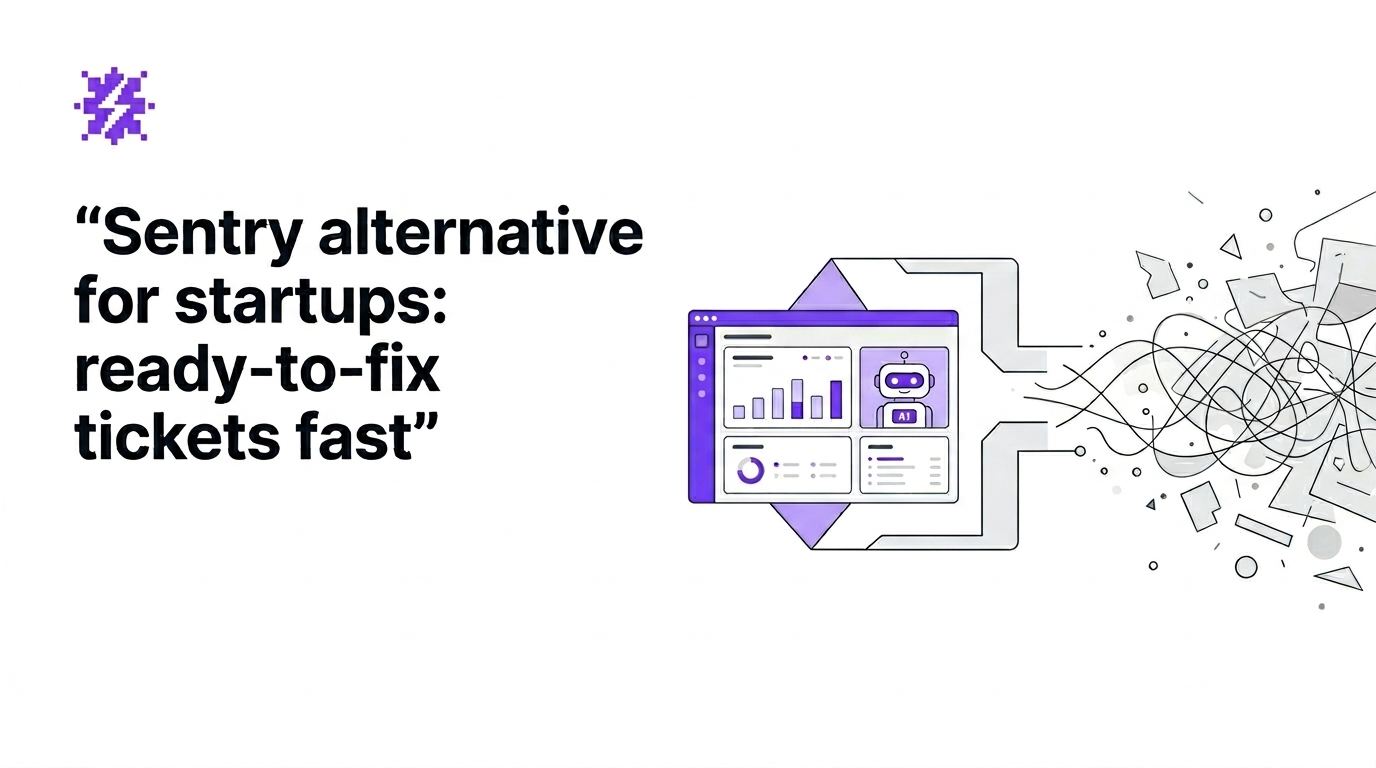
 From production error to an AI-generated ready-to-fix ticket with repro steps and full context.
Your first-value goal is simple: see one actionable issue with repro steps and context, then confirm it is deduped and fixable.
If your current process relies on a bug report template, use it as a benchmark: how much of it is auto-filled vs manually collected by PM/CS?
Early-stage teams are budget-sensitive on devtools. The easiest way to justify a Sentry alternative is to track weekly outcomes tied to engineering time and customer impact:
For a broader view of your stack, compare Flash Log with other best tools to reduce MTTR and decide what should be automated vs merely monitored.
Self-serve works when one person owns triage. Team plans make sense when triage becomes shared, standardized, and needs governance.
If you also want tighter release accountability, connect monitoring to deployments using error monitoring with CI/CD so spikes correlate with releases and rollbacks become faster decisions.
If you are evaluating a Sentry alternative for startups, do not start with a long migration plan. Start with one project and one measurable win: one automatically captured issue that becomes a ready-to-fix ticket with repro steps and full context in under 10 minutes.
Once you see that output consistently, roll it out across projects and upgrade when multiple roles (Engineering, Product, CS) need shared visibility, standardized triage, and automated lifecycle management.
 Self-serve quickstart: install, trigger an error, and validate first value in under 10 minutes.
Weekly tactics to reduce debugging time, automate bug reporting, and ship faster without breaking production.